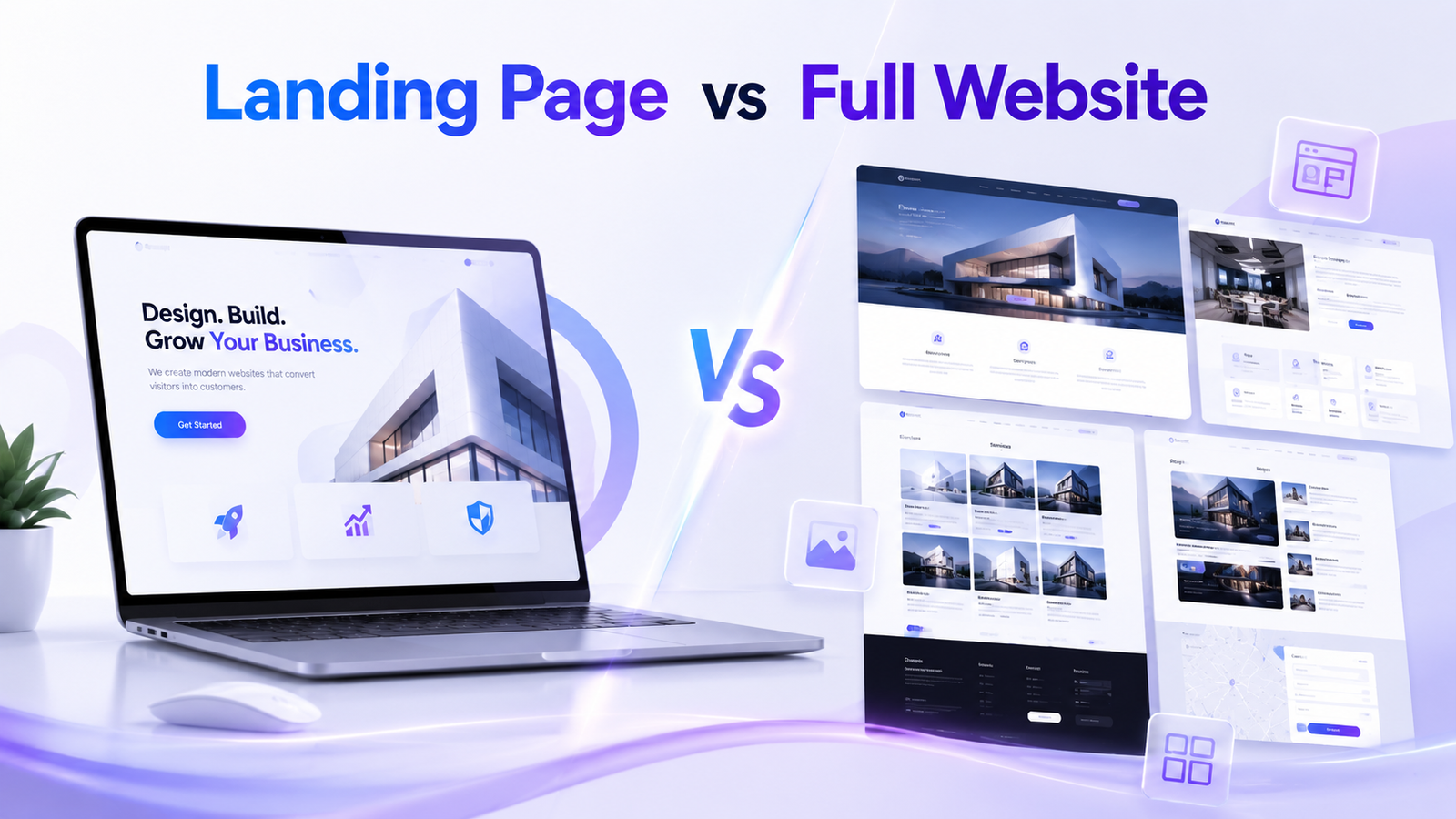
When building an online presence, one of the first questions business owners ask is: Should I create a landing page or invest in a full website? The answer isn’t always straightforward because both options serve different purposes and can be highly effective when used correctly.
Some businesses only need a single page to promote a specific service or campaign, while others require a complete website to establish credibility, showcase multiple services, and support long-term growth. Choosing the wrong option can lead to missed opportunities, lower conversions, or unnecessary expenses.
In this guide, we’ll explain the differences between a landing page and a full website, compare their benefits, and help you decide which solution is best for your business.
What Is a Landing Page?
A landing page is a single web page designed with one primary goal—encouraging visitors to take a specific action.
That action might include:
- Requesting a quote
- Booking a consultation
- Purchasing a product
- Downloading a resource
- Signing up for a newsletter
Unlike traditional websites, landing pages remove unnecessary distractions. They focus visitors on a single call-to-action, making them ideal for advertising campaigns and lead generation.
Landing pages are commonly used with Google Ads, Facebook Ads, email marketing, and promotional campaigns because they are designed to maximize conversions.
What Is a Full Website?
A full website consists of multiple pages that provide detailed information about your business.
Typical business websites include:
- Home
- About
- Services
- Portfolio
- Blog
- FAQs
- Contact
A complete website helps customers learn more about your company, explore your services, and build trust before making a decision.
Unlike a landing page, a website supports long-term SEO, content marketing, and brand growth.
Key Differences Between a Landing Page and a Website
Although both exist online, their objectives are very different.
A landing page focuses on one goal and encourages one specific action.
A website provides comprehensive information about your business and supports multiple customer journeys.
Landing pages are usually shorter, while websites contain multiple interconnected pages.
Landing pages are optimized for conversions.
Websites are optimized for branding, SEO, and long-term online visibility.
When Should You Choose a Landing Page?
A landing page is the better option if you:
- Run paid advertising campaigns
- Promote one service or product
- Need to generate leads quickly
- Launch a new product
- Collect email subscribers
- Test marketing campaigns
Since visitors have fewer distractions, landing pages often produce higher conversion rates than traditional websites.
When Should You Choose a Full Website?
A complete website is ideal if you:
- Want to establish a professional brand
- Offer multiple services
- Need long-term SEO traffic
- Want to publish blogs
- Showcase your portfolio
- Build customer trust
- Expand your business over time
A business website becomes your digital headquarters where customers can find everything they need.
SEO Comparison
Landing pages can rank in Google, but they usually target a single keyword or campaign.
A full website allows you to target hundreds of keywords across different pages and blog posts.
For example:
- Home Page
- Service Pages
- Portfolio
- Blog Articles
- FAQs
- Case Studies
This creates many opportunities to attract organic traffic from search engines.
If SEO is an important part of your marketing strategy, a full website offers much greater long-term value.
Which One Converts Better?
Landing pages generally achieve higher conversion rates because every section guides visitors toward one specific goal.
There are no unnecessary navigation menus or competing calls-to-action.
However, visitors who want to learn more about your business may feel limited by a single-page experience.
A professional website builds trust through testimonials, portfolio projects, company information, and detailed service pages.
The highest-performing businesses often use both.
Can You Use Both Together?
Absolutely.
Many successful companies use a complete website for branding and SEO while creating dedicated landing pages for advertising campaigns.
For example:
- Google Ads → Landing Page
- Facebook Ads → Landing Page
- Organic Google Search → Website
- Social Media → Website
- Portfolio Links → Website
This strategy combines the strengths of both approaches.
Cost Comparison
Landing pages are generally quicker and less expensive to build because they contain only one page.
Full websites require additional planning, design, content creation, and development.
Although the initial investment is higher, a professional website provides significantly more long-term value for growing businesses.
Which Option Is Best for Your Business?
If your goal is generating leads from advertising campaigns, a landing page is an excellent solution.
If you want to build credibility, improve SEO, publish content, and grow your online presence, a full website is the better investment.
For many businesses, the smartest strategy is combining both—a professional website for long-term growth and dedicated landing pages for marketing campaigns.
Final Thoughts
There is no universal answer to the landing page versus website debate because every business has different goals.
Landing pages excel at driving immediate conversions through focused marketing campaigns.
Full websites provide credibility, improve search engine visibility, support content marketing, and create a strong foundation for long-term business growth.
Before making your decision, consider your marketing strategy, budget, and future plans.
If you’re looking to grow your business online, a professionally designed WordPress website combined with high-converting Elementor landing pages can help you attract more visitors, generate more leads, and increase your sales.